
Text Is Reshaping Influence
The next phase of influence is about authorship, not just visibility.

After years of video dominance that reshaped platform design, creator economics, and audience behavior across the internet, a quieter and less-discussed shift is underway. Text-based features are re-emerging as central engagement tools across major platforms. Substack’s Notes, Instagram’s Notes, long-form posts on X, and the continued growth of newsletter infrastructure are all gaining measurable traction — offering creators a way to build audience outside the compressed, algorithm-optimized logic of short-form video feeds. The emergence is not incidental. It is a response to specific structural failures in the video-first model.
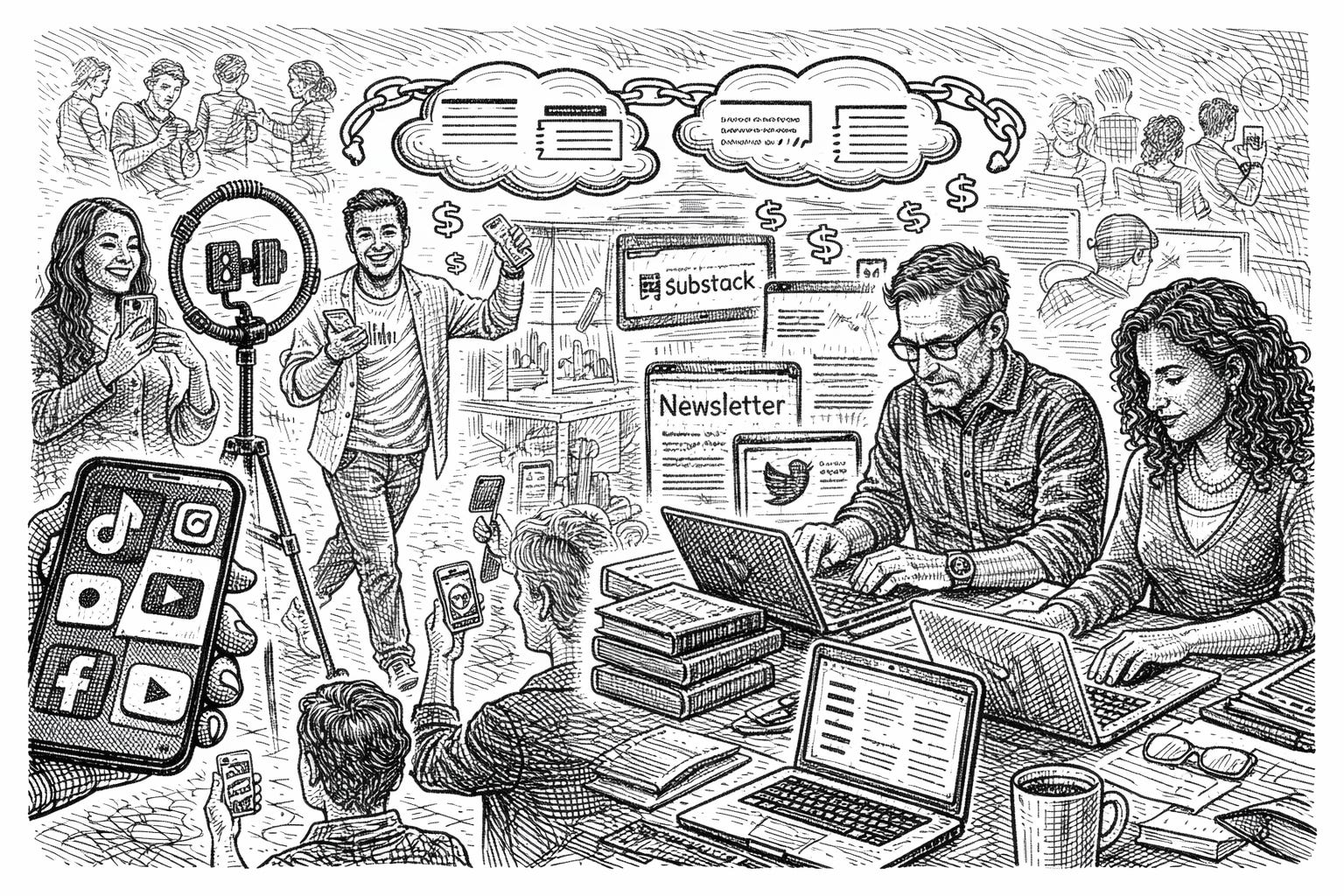
The short-form video era produced genuine scale. Platforms like TikTok demonstrated that attention could be captured and held at mass levels through algorithmic content delivery, and the influence industry responded accordingly — pivoting budgets, creator strategies, and platform design around the short clip as the dominant unit of digital communication. But that model has begun to show its limits. Short-form video is now overcrowded in a way that mirrors the saturation of earlier platform formats. Creators are competing for attention in increasingly compressed timeframes, with diminishing returns on virality. A video that would have generated significant audience growth two years ago now disappears into a feed that generates thousands of comparable pieces per hour.
Text, by contrast, offers a fundamentally different kind of engagement. It allows for nuance, continuity, and the sustained development of a point of view over time. According to recent platform engagement data, text-based posts are seeing higher engagement rates among niche audiences — particularly in areas tied to analysis, commentary, and cultural critique. Substack has reported consistent year-over-year growth in both writer and reader numbers, with a notable acceleration in political, cultural, and subject-matter-specialist newsletters that operate outside the entertainment-first logic of legacy media. The audience being built in these spaces is smaller by platform-scale standards, but it is demonstrably more engaged, more likely to pay, and more likely to advocate for the work.
What is changing is not just the format preference. It is the definition of influence itself. The video-first era operationalized influence as reach — the ability to place content in front of large numbers of people, regardless of whether that content shaped anything they thought or did. Text is reorienting the conversation around something different: the ability to shape narrative, provide durable context, and build a sustained intellectual relationship with an audience over time. Those things are harder to achieve and harder to quantify. They also produce a qualitatively different kind of cultural authority.
For creators operating in commentary, journalism, and cultural criticism — the exact genres where the short-form model was always a poor fit — this represents a meaningful structural opening. The infrastructure that made newsletter publishing difficult, expensive, and distribution-dependent has been substantially dismantled by platforms like Substack, Ghost, and Beehiiv. The barrier to reaching a paying audience with long-form, perspective-driven work has never been lower. At the same time, the appetite for that work — context, depth, sustained argument — has arguably never been higher in the post-pandemic media environment, where trust in legacy institutions continues to erode and audiences are actively seeking alternative sources of intellectual orientation.
The return to text is not a rejection of video or a nostalgic retreat to an earlier media era. It is a recalibration — one that privileges perspective over performance, sustained voice over isolated virality, and authorship over algorithmic placement. SSC’s own editorial model, built around structured long-form coverage across beats rather than content-volume churn, reflects exactly this bet. The question the industry is beginning to work through is whether the platforms, the monetization infrastructure, and the audience behavior can stabilize around text-first influence fast enough to support the creators who are already making the move.