
When Access Becomes Conditional
Cuts to HIV care reveal a broader shift in how public systems define who qualifies—and who doesn’t.

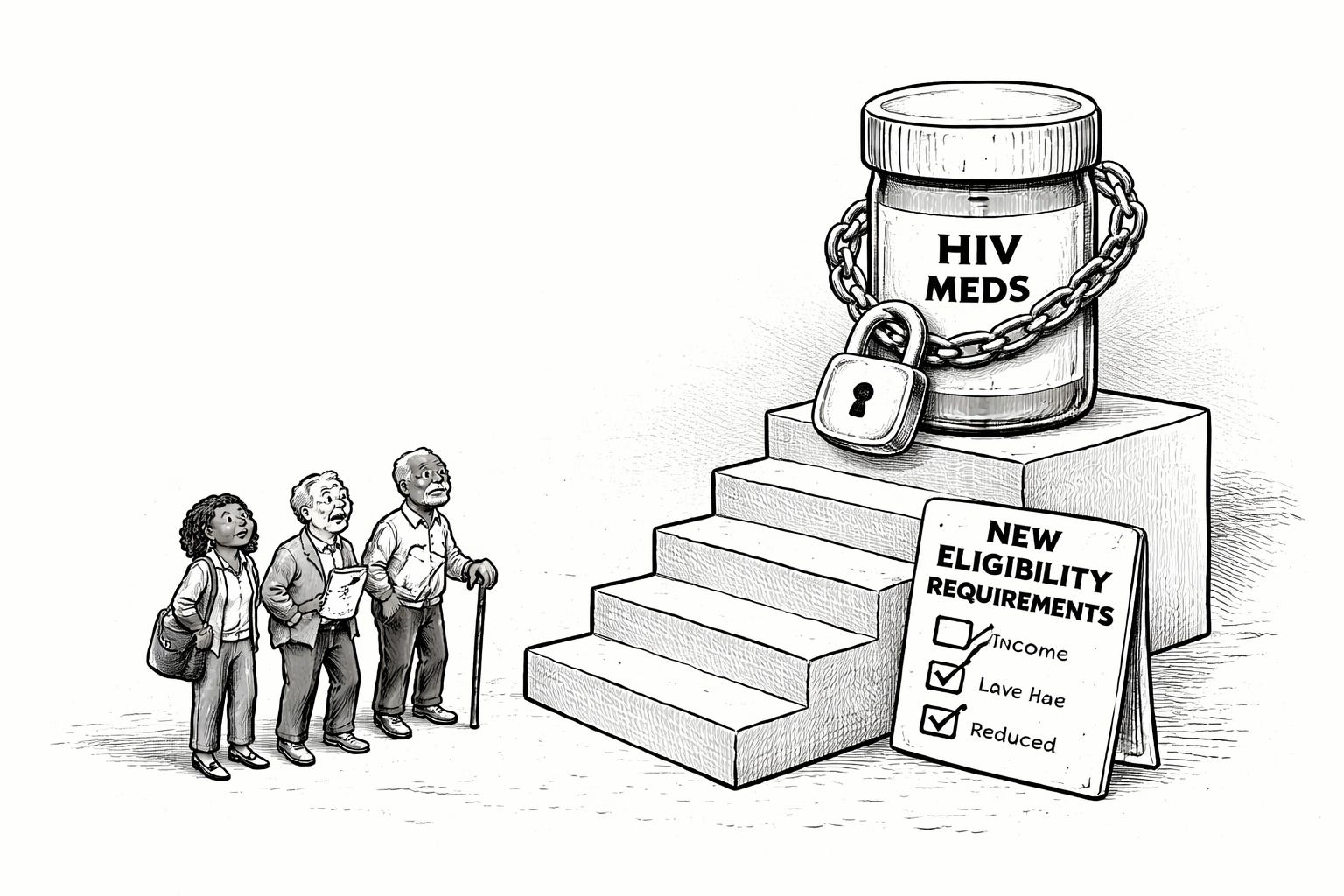
There was a time when access to essential care was treated as a public health obligation. The question was not who deserved it — it was how to reach the people who needed it most. That framing is changing.
Across the country, state HIV drug assistance programs — which provide life-saving antiretroviral medications to low-income and uninsured Americans — are being cut back. More than a dozen states have already reduced access. Many more are considering additional reductions. The changes are not happening in isolation. They are happening inside a system where costs are rising faster than funding, and where federal pressure is being absorbed at the state level in ways that produce very different outcomes depending on where you live.
In Florida, the impact is concrete and immediate. The state recently reduced eligibility for its program from 400 percent of the federal poverty level to 130 percent — dropping the income threshold from roughly $63,000 to just over $20,000. Thousands of people who previously qualified may now find themselves without coverage. Medications have also been removed from formularies, further narrowing access even for those who still technically qualify.
These are described as budget decisions. Their effects are structural.
A system that was designed around broad access is becoming selective. Eligibility tightens. Coverage narrows. Support becomes conditional — something that must be applied for, justified, and continuously re-evaluated rather than assumed. The infrastructure remains in place, but it serves fewer people, more restrictively, and with less consistency than it was built to provide.
This pattern extends well beyond healthcare, and it is the throughline of what The Access Shift tracks: the quiet redefinition of public systems under fiscal and political pressure. What changes is not always whether a program exists — it is whether the program still functions as genuine public infrastructure, or whether it has evolved into something more like a managed resource, available to some and conditional for others.
For people living with HIV, the medications in question are not quality-of-life treatments. They are what keep people alive and prevent transmission. When access to those medications becomes dependent on income thresholds that exclude working adults, the consequences are not abstract. They are clinical. They are measurable. And they fall hardest on the people the original programs were specifically designed to reach.
The question is not whether these systems still exist. It is whether they still mean what they were built to mean — and who bears the cost when they no longer do.
Series: The Access Shift
The gradual redefinition of who systems are designed to serve.
Across sectors—from public infrastructure to healthcare to everyday spaces—access is no longer assumed. As costs rise and systems face increasing pressure, services once built for broad reach are becoming more selective, more conditional, and less universal. The Access Shift explores how these changes are unfolding in real time—and what they reveal about who is included, who is left out, and how the structure of everyday life is quietly being reshaped.
 | A guest post by
|